Why a New Frisco Home's Foundation Crack Can Be the Riskier One
August 27, 2026
August 27, 2026
The inspector is on his knees at the corner of the driveway, laser level balanced on a tripod, running elevation readings across a slab that's less than three years old. It's late August in Phillips Creek Ranch, the ground outside has gone hard and dusty after weeks without rain, and the five-day option period clock the buyers are working against started ticking on Monday. What he's measuring will decide whether this deal moves forward as written, gets renegotiated over a few thousand dollars, or falls apart entirely.
Here's the part that surprises most buyers walking into a Frisco transaction: the crack he's about to document in that newer home might be a bigger problem than the same crack would be in a house built twenty years ago half a mile down Eldorado Parkway.
That runs against instinct. New construction is supposed to be the safe bet, the one with the transferable builder warranty and the systems that haven't had time to fail yet. But foundations don't work like roofs or water heaters. They don't wear out with age. They move with the soil underneath them, and in Frisco, the soil has a documented habit of punishing fast growth more than it punishes time.
Frisco sits on expansive clay soil, part of the Blackland Prairie belt that runs across North Texas, and the specific classification used in local structural assessments carries a Plasticity Index around 40, which puts it in the severe risk category. Clay at that plasticity swells substantially when it absorbs moisture and shrinks measurably when it dries out, and that push and pull happens every year, not once.
Older neighborhoods have already been through it, repeatedly. Mid-city subdivisions built roughly between 1997 and 2008 along the Lebanon Road and Eldorado Parkway corridors have cycled through two decades or more of shrink and swell. Their foundations have largely finished moving. When a crack shows up in one of these homes today, it usually reflects completed, historic settlement rather than something still in progress.
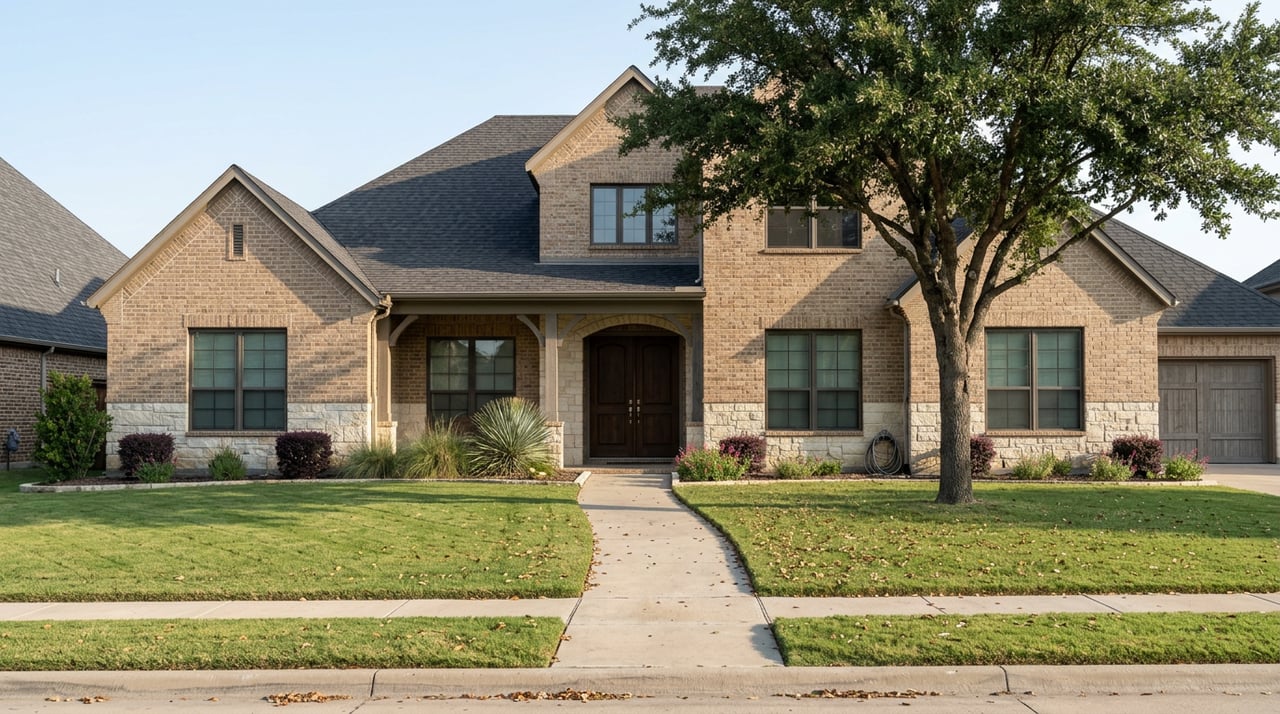
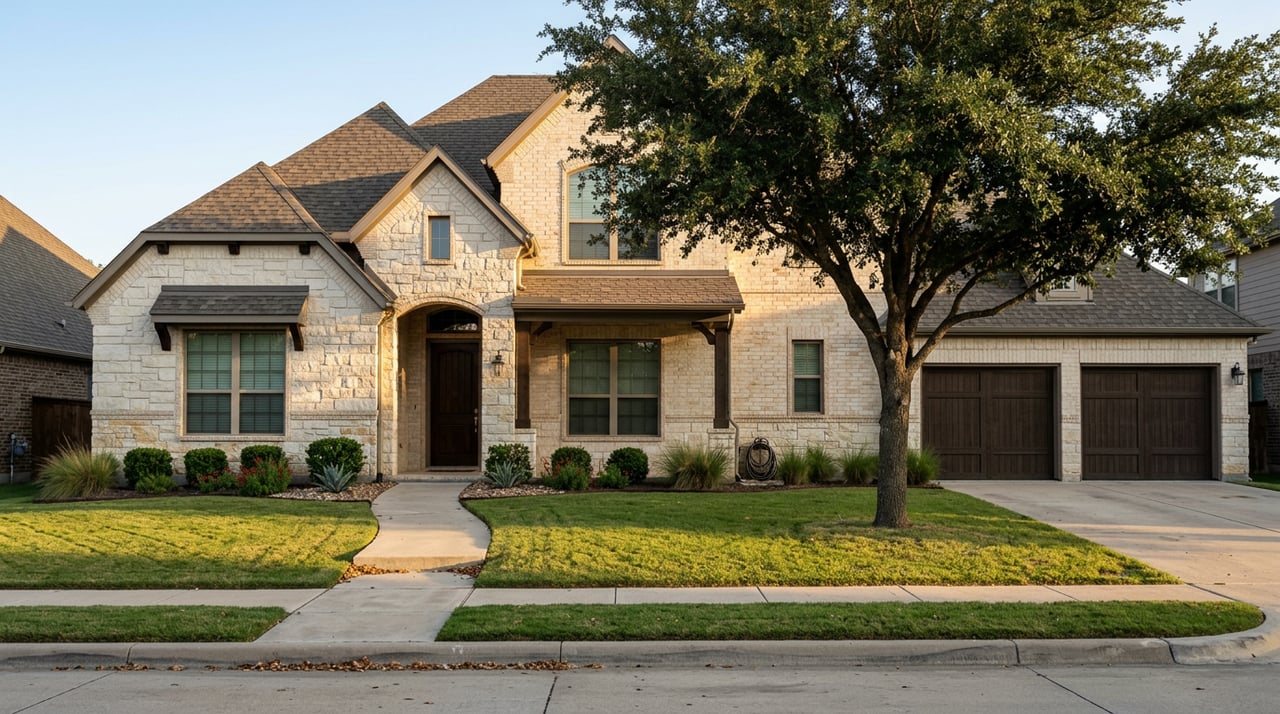
Newer subdivisions haven't had that luxury. Frisco's rapid growth over the past two decades meant a lot of homes went up quickly on fill soil that wasn't always engineered for the long-term behavior of the clay underneath it. A crack in a three-year-old home in one of Frisco's newer master-planned sections can mean the foundation is still actively settling into ground that hasn't stabilized yet. Active movement is a different problem than historic movement, and it changes everything about how the negotiation should go.
The distinction isn't cosmetic. It's the single biggest variable in what a foundation item ends up costing during a Frisco transaction.
| Crack condition | What it typically requires | Rough cost range |
|---|---|---|
| Stable, completed movement | Injection repair only | $500 to $3,000 |
| Active movement at one section | Crack repair plus pier stabilization at the settling perimeter | $8,000 to $14,000 |
| Active movement across the structure | Comprehensive perimeter stabilization | $15,000 to $35,000 |
A crack that looks identical to the naked eye can sit anywhere on that table depending on whether the movement underneath it has stopped. That's why a visual-only walkthrough during a showing tells a buyer almost nothing useful, and why the real answer comes from an elevation survey, not a flashlight and a tape measure.
If you're under contract on a Frisco home right now, the timing works in your favor more than you'd expect. Foundation cracks in this area typically appear or worsen during late summer, roughly August through October, when drought stress on the clay peaks, and again in late winter through early spring when rapidly re-saturating soil produces the opposite kind of stress. Buyers who inspect during a dry stretch are seeing the soil at its most revealing, not its most forgiving.
The August 2022 drought produced a particularly sharp wave of new crack development across Collin County, and it's the kind of event that separates homes with well-drained lots from homes without one. Frisco sits on relatively higher terrain than some of its neighbors, and homeowners in lower-lying communities like Little Elm, Savannah, and Oak Point tend to notice worse movement during the re-saturation phase, as water collects against the perimeter grade beam with less natural runoff to help it along. That's not a reason to write off a home outside Frisco. It's a reason to ask where the water actually goes on the lot you're buying, regardless of city limits.
A foundation crack that shows up during Frisco's August drought stress is the soil already at one of its two most revealing points of the year, not a warning that quietly resurfaces once the weather turns.
Texas gives buyers an unrestricted right to walk away for any reason during a negotiated option period, typically five to seven calendar days in Collin and Denton counties, in exchange for a small option fee paid directly to the seller. That week is genuinely a sprint. A general inspection usually happens in the first two or three days, and if it flags foundation concerns, a specialty structural evaluation needs to be scheduled immediately, because engineers and foundation specialists in a growing market like this one book up fast.
A few things worth knowing before that evaluation comes back:
If you're selling a home in one of the established corridors near Lebanon Road or Eldorado Parkway, or in communities like Stonebriar, Panther Creek, Newman Village, Grayhawk, Starwood, or The Trails of Frisco, the foundation conversation is coming whether you volunteer it or not. Texas law requires sellers to disclose known material defects, including previous foundation repairs, on the standard disclosure form, and that obligation doesn't disappear behind an "as-is" clause. As-is affects whether you're required to make repairs. It does not affect whether you're required to say what's wrong.
Sellers sometimes assume a foundation repair completed years ago no longer needs to be mentioned because the problem is fixed. It still needs to be disclosed, with documentation if you have it, because the buyer's structural engineer will often be able to spot evidence of prior pier work anyway, and an undisclosed repair discovered during inspection tends to cost far more in renegotiated trust than the disclosure itself ever would have. Concealing even a modest foundation issue can expose a seller to a fraud claim well beyond the cost of the repair.
Two practical habits help more than anything else: keep large trees, particularly Shumard red oak, live oak, and cedar elm, at least ten feet from the foundation, since root systems that close pull moisture unevenly from the soil and create the kind of corner-specific crack patterns inspectors flag most often. And schedule a foundation check each fall, after summer drought stress has peaked, so you know what a buyer's inspector is going to find before they find it.
Does a foundation crack automatically kill a Frisco deal? No. Most cracks are stable and resolve with injection repair in the $500 to $3,000 range. The deal-threatening scenarios are the ones where an engineer confirms active movement across multiple sections of the structure.
Is a resale home in an older Frisco neighborhood automatically the riskier buy? Not based on age alone. A home that's cycled through twenty years of shrink and swell has often finished moving. The higher-risk scenario is frequently the opposite: a newer home on fill soil that hasn't settled yet.
Should I skip the specialty inspection if the general inspector didn't flag anything major? If you notice stair-step brick cracks, doors that stick, or gaps at exterior corners, get the specialty evaluation regardless of what the general report says. Those are exactly the signals a structural elevation survey is built to interpret.
Whether you're negotiating a credit on a resale near Eldorado Parkway or deciding how hard to push on a three-year-old home in a newer Frisco community, the foundation conversation goes better when you already understand what the soil is doing and why. If you want a second set of eyes on a Frisco contract before your option period runs out, or you're weighing where in the city to start looking in the first place, reach out to Mike Farish and get your free home valuation to start the conversation from solid ground.
Stay up to date on the latest real estate trends.