Why Two Frisco Homes at the Same Price Can Cost Very Different Amounts
August 13, 2026
August 13, 2026
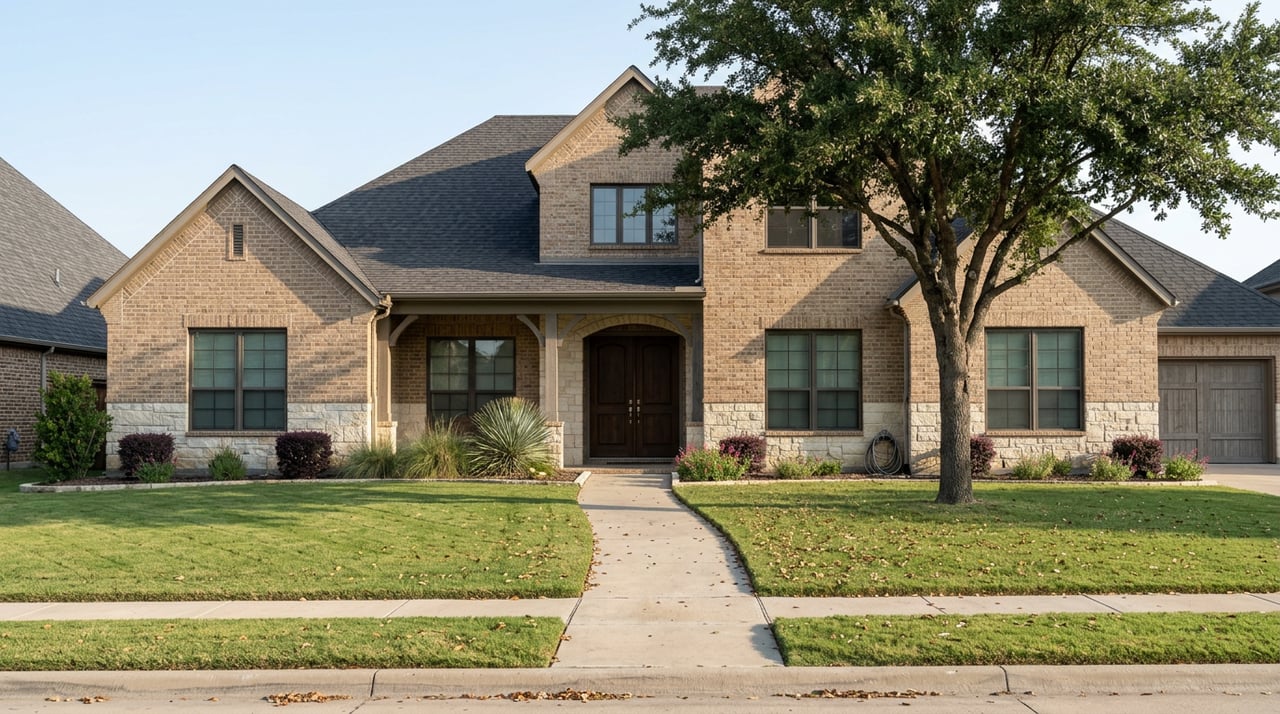
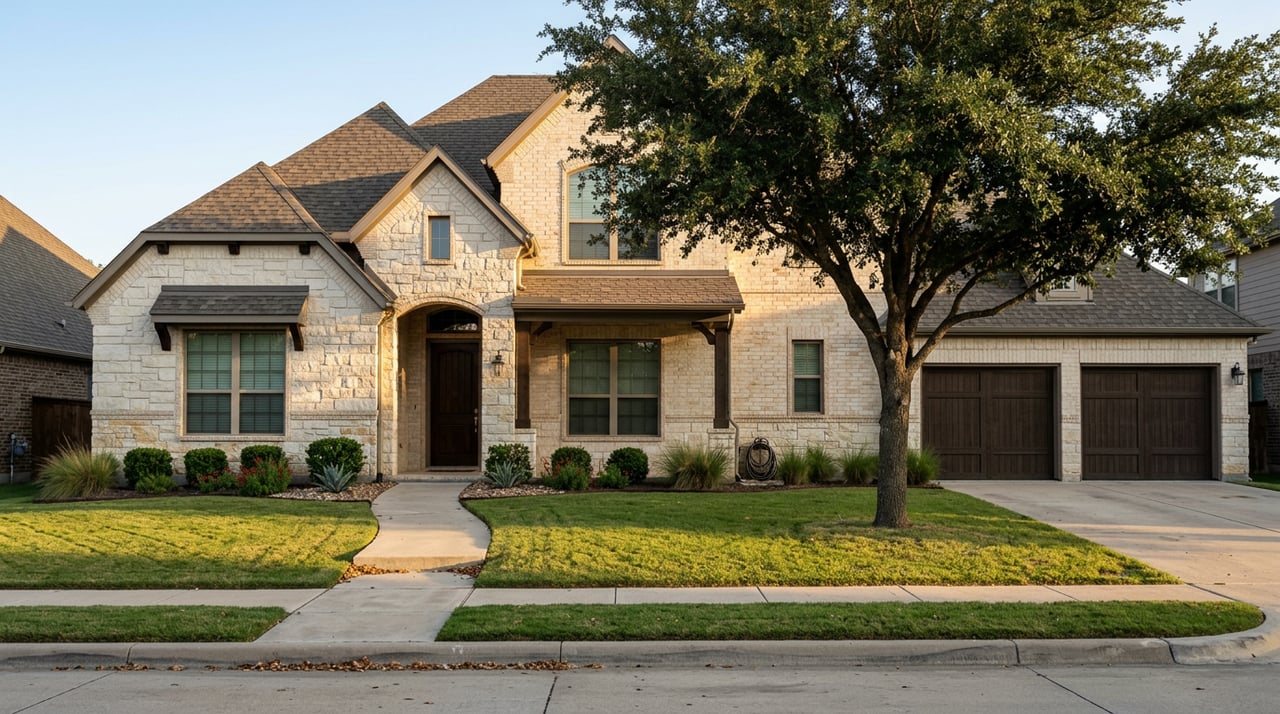
Picture two four-bedroom homes, both listed at $650,000, both a few miles apart inside Frisco city limits. On paper they look identical. Run the numbers on each one's actual tax statement, though, and the annual bill on one can land close to $9,200 while the other clears $13,000 or more. Same price. Same square footage. Different neighborhood, different math.
That gap doesn't show up in a median price headline, and it rarely shows up on a listing sheet either. It comes from a layer of Texas local government most buyers only discover after they've already gone under contract: the county appraisal district's line-by-line tax statement.
Frisco's own city tax rate for fiscal year 2026 is $0.425517 per $100 of assessed value, unchanged from the year before, and the City Council raised the homestead exemption from 15% to 20% this year, the maximum allowed under Texas law. On its own, that's a modest, predictable piece of the puzzle, saving the average homeowner around $120 a year on the city portion of the bill.
But the city rate is only one layer. Your total bill also depends on which county your address sits in, Collin or Denton, and which school district serves it, since Frisco ISD, Prosper ISD, and Lewisville ISD all have territory inside city limits. On the Collin County side, in Frisco ISD, the combined city, county, and school rate runs close to 1.96% of assessed value before any exemptions. Once standard homestead exemptions are applied, that effective rate on a $600,000 home typically settles closer to 1.42%, or roughly $8,500 a year.
That's the baseline. It's also where most online affordability calculators stop.
Many newer Frisco neighborhoods carry an additional MUD tax, a PID assessment, or both, and depending on the development, that can add another $2,000 to $8,000 or more per year on top of the baseline bill. A Municipal Utility District is a separate taxing entity that issues bonds to build water, wastewater, and drainage infrastructure, then repays those bonds through an annual property tax that shows up as its own line on your county statement. A Public Improvement District works differently: it's a city-established assessment tied to a specific set of improvements, like parks or streetscapes, and it typically follows a fixed repayment schedule that doesn't shrink just because your home's value goes up.
Here's how the stack actually breaks down:
| Layer | What it funds | Who levies it | What to expect |
|---|---|---|---|
| City tax | Police, fire, parks, streets | City of Frisco | $0.425517/$100 for FY26, stable year over year |
| School district tax | Local schools | Frisco ISD, Prosper ISD, or Lewisville ISD | Usually the largest single share of the bill |
| County tax | County services | Collin or Denton County | Varies by county line |
| MUD | Water, wastewater, drainage infrastructure | Independent MUD board | Can add $2,000 to $8,000+ a year, often declines as bonds retire |
| PID | Specific improvements like parks or entry features | City-established assessment | Fixed schedule that can run for decades |
A home outside any MUD or PID pays roughly the top three rows. A home inside one pays all five, and the difference between those two scenarios is exactly what separates the $9,200 bill from the $13,000 one.
The clearest real example of this in Frisco is the Panther Creek Estates PID, one of only two the city itself established, both created under Texas Local Government Code Chapter 372 specifically for the Panther Creek area. The district came about when developer Intermandeco proposed expediting construction of two city parks, Bob White and Mourning Dove, along with enhancements to the neighborhood's entrances and green spaces. The city financed the work through a bond process, and each home in the district was assessed a share of the repayment, either paid in full at closing or billed annually over 20 years.
The actual dollar figures are public record. Depending on the phase, the total per-lot assessment runs $2,497.82 or $3,014.59.
If a homeowner chooses to pay over time, the annual billing works out to $241.72 a year, spread across a 20-year period.
That's a modest number in isolation, and the Panther Creek Estates HOA eventually consolidated the billing with regular HOA dues to save on separate mailings. But it's also a real, ongoing cost that a home three streets over, outside the district boundary, simply doesn't carry.
Here's the part that makes this more than a static disclosure issue. As of March 27, 2025, the City of Frisco has been in the process of closing out PID 1 and PID 2, the very districts covering Panther Creek. Twenty years after the bonds were sold, the assessment schedule is finally running out.
That matters for how you should actually think about a MUD or PID line item when you're comparing homes. It isn't a permanent tax on the property forever. It's a repayment schedule with a start date and an end date, and depending on where a neighborhood sits in that schedule, the "extra cost" you're weighing might have three years left on it or seventeen. A blanket rule like "avoid anything with a PID" throws out useful information. The better question is how many years remain.
If you're cross-shopping Frisco against McKinney or Prosper, or comparing two Frisco listings that look identical on paper, the sticker price is the least useful number for judging what you'll actually pay each year. Before you write an offer, it's worth doing a few specific things:
As a rough budgeting rule, plan on a total tax rate somewhere between 1.7% and 2.2% of assessed value for a Frisco home. The lower end generally applies to homes outside any special taxing district. The higher end applies when a MUD or PID is part of the picture. Either way, that range is a planning tool, not a substitute for pulling the real number on the specific property you're considering.
Is a PID assessment the same thing as an HOA fee? No. An HOA fee covers ongoing maintenance of shared amenities and is set by the homeowners association. A PID assessment repays bonds the city issued to build specific public improvements, and it can be billed separately or, as happened in Panther Creek Estates, folded into HOA billing for convenience.
Will a MUD tax eventually go away? It can decrease as the district's bonds are paid down, since the annual tax is set to cover debt service on outstanding bonds. As those obligations shrink, so can the rate.
Does every new construction neighborhood in Frisco carry a MUD or PID? No. Whether a specific subdivision carries one depends entirely on how it was developed and financed. That's exactly why the county tax statement, not a general assumption about "newer Frisco neighborhoods," is the document worth checking.
Comparing homes across Frisco, or across Frisco and its neighboring suburbs, means looking past the number on the sign in the yard. If you'd like help pulling apart what a specific address actually costs to own, from the school district boundary down to whether a MUD or PID applies, Mike Farish can walk through the real numbers with you. Get your free home valuation and a clear picture of what you're actually signing up for before you write an offer.
Stay up to date on the latest real estate trends.